

 Deutsch
 English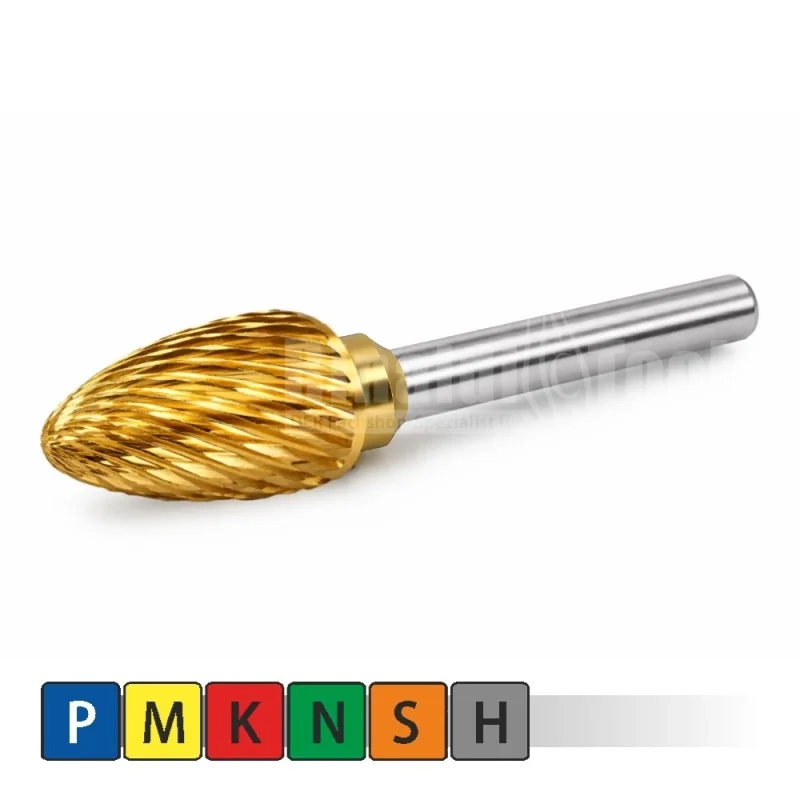
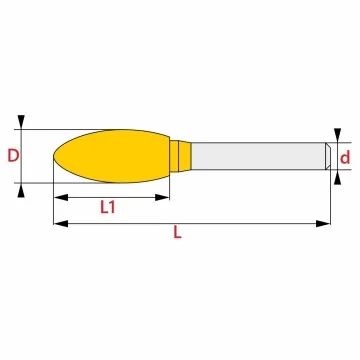
| Mill Type | Rotary Burr |
| Workpiece Materials | Steel, Stainless Steel, Cast Iron, NF-Metals, Super Alloys & Hard Materials |
| Grade | RT510: TiN-coated carbide burr for use with industrial robots or in manual operation |
| Schaft | Cylindrical Shank |
| Shape | Flame Shape |
| MOQ | To Ø8 = 3, from Ø10 = 1 |
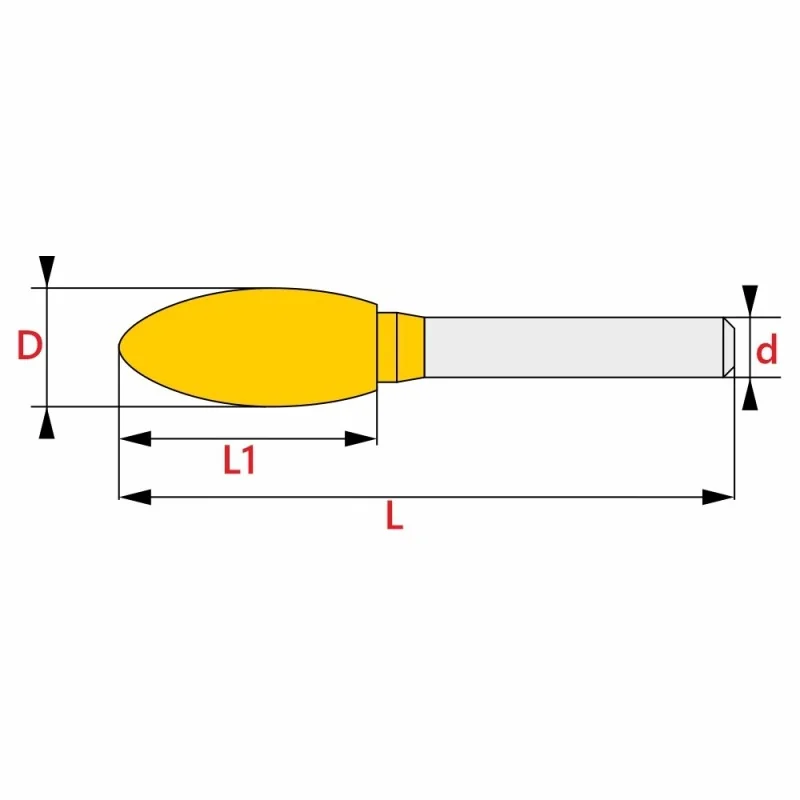
| D | L1 | L | d | |
| HMFS-F-D06-S06 RT510 | 6 | 18 | 63 | 6 |
| HMFS-F-D08-S06 RT510 | 8 | 20 | 65 | 6 |
| HMFS-F-D10-S06 RT510 | 10 | 25 | 70 | 6 |
| HMFS-F-D12-S06 RT510 | 12 | 32 | 77 | 6 |
| HMFS-F-D14-S06 RT510 | 14 | 34 | 79 | 6 |
| HMFS-F-D16-S06 RT510 | 16 | 36 | 81 | 6 |
The flame-shaped carbide rotary burr from Rinaldi-Tools is a professional solution for demanding edge and contour machining. Equipped with a robust 6 mm steel shank and a high-performance carbide head, this tool enables high stock removal thanks to its precise cross-cut grinding. The flame geometry is ideal for hard-to-reach areas, weld seams, and complex workpiece contours. 
The flame-shaped carbide rotary burr of the RT510 grade is a premium cutting tool designed for professional metalworking. Featuring a durable 6 mm steel shank and a coated carbide head, this rotary burr is explicitly engineered for efficient stock removal. The characteristic flame shape is ideally suited for machining hard-to-reach contours, smoothing weld seams, and performing versatile deburring tasks. The cross-cut grinding ensures excellent stock removal performance, accompanied by smooth running properties and the generation of short chips. The TiN coating reliably protects the tool against wear and promotes a long service life, particularly when machining steel.





| Item Nr. | D | L1 | L | d | |
| HMFS-F-D06-S06 RT510 | 2800061 | 6 | 18 | 63 | 6 |
| HMFS-F-D08-S06 RT510 | 2800062 | 8 | 20 | 65 | 6 |
| HMFS-F-D10-S06 RT510 | 2800063 | 10 | 25 | 70 | 6 |
| HMFS-F-D12-S06 RT510 | 2800064 | 12 | 32 | 77 | 6 |
| HMFS-F-D14-S06 RT510 | 2800065 | 14 | 34 | 79 | 6 |
| HMFS-F-D16-S06 RT510 | 2800066 | 16 | 36 | 81 | 6 |
This rotary burr is designed for both guided manual operation with pneumatic or electric grinders and automated use on industrial robots. It provides reliable performance in mold making, weld seam processing, and general maintenance. The flame-shaped geometry opens up flexible application possibilities for complex workpiece shapes and demanding internal contours.
Thanks to the special TiN coating and the precise cross-cut grinding, users benefit from an efficient workflow. Short chips prevent the tool edges from clogging prematurely, which facilitates handling and maintains consistently high machining quality. The universal applicability across various material groups also reduces the need for frequent tool changes, thereby optimizing workshop processes.
Data sheet
| Mill Type | Rotary Burr |
| Workpiece Materials | Steel, Stainless Steel, Cast Iron, NF-Metals, Super Alloys & Hard Materials |
| Grade | RT510: TiN-coated carbide burr for use with industrial robots or in manual operation |
| Schaft | Cylindrical Shank |
| Shape | Flame Shape |
| MOQ | To Ø8 = 3, from Ø10 = 1 |
| D | L1 | L | d | |
| HMFS-F-D06-S06 RT510 | 6 | 18 | 63 | 6 |
| HMFS-F-D08-S06 RT510 | 8 | 20 | 65 | 6 |
| HMFS-F-D10-S06 RT510 | 10 | 25 | 70 | 6 |
| HMFS-F-D12-S06 RT510 | 12 | 32 | 77 | 6 |
| HMFS-F-D14-S06 RT510 | 14 | 34 | 79 | 6 |
| HMFS-F-D16-S06 RT510 | 16 | 36 | 81 | 6 |
The flame-shaped carbide rotary burr from Rinaldi-Tools is a professional solution for demanding edge and contour machining. Equipped with a robust 6 mm steel shank and a high-performance carbide head, this tool enables high stock removal thanks to its precise cross-cut grinding. The flame geometry is ideal for hard-to-reach areas, weld seams, and complex workpiece contours.
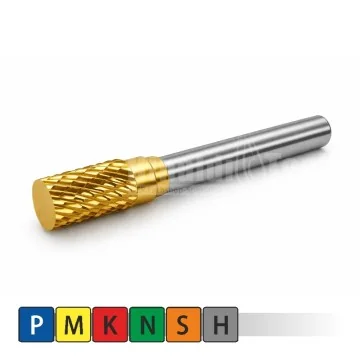
| Mill Type | Rotary Burr |
| Workpiece Materials | Steel, Stainless Steel, Cast Iron, NF-Metals, Super Alloys & Hard Materials |
| Grade | RT510=TiN-coated carbide burr for use with industrial robots or in manual operation |
| Schaft | Cylindrical Shank |
| Shape | Cylinder Shape |
| MOQ | To Ø8 = 3, from Ø10 = 1 |
| D |
L1 |
L |
d |
|
| HMFS-Z-D06-S06 RT510 | 6 | 16 | 61 | 6 |
| HMFS-Z-D08-S06 RT510 | 8 | 20 | 65 | 6 |
| HMFS-Z-D10-S06 RT510 | 10 | 20 | 65 | 6 |
| HMFS-Z-D12-S06 RT510 | 12 | 25 | 70 | 6 |
| HMFS-Z-D14-S06 RT510 | 14 | 25 | 70 | 6 |
| HMFS-Z-D16-S06 RT510 | 16 | 25 | 70 | 6 |
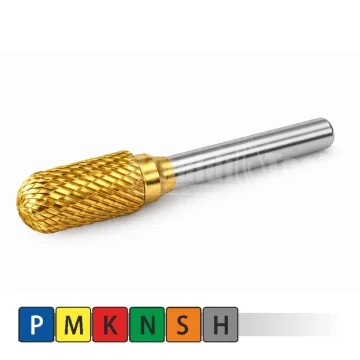
The professional Rotary Burr - Burrs Shape cylindrical without end fase cut provides a reliable solution for demanding machining tasks in various materials. 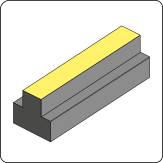
| Mill Type | Rotary Burr |
| Workpiece Materials | Steel, Stainless Steel, Cast Iron, NF-Metals, Super Alloys & Hard Materials |
| Grade | RT510=TiN-coated carbide burr for use with industrial robots or in manual operation |
| Schaft | Cylindrical Shank |
| Shape | Ball-Nosed Cylinder Shape |
| MOQ | To Ø8 = 3, from Ø10 = 1 |
| D | L1 | L | d | |
| HMFS-WR-D06-S06 RT510 | 6 | 16 | 61 | 6 |
| HMFS-WR-D08-S06 RT510 | 8 | 20 | 65 | 6 |
| HMFS-WR-D10-S06 RT510 | 10 | 20 | 65 | 6 |
| HMFS-WR-D12-S06 RT510 | 12 | 25 | 70 | 6 |
| HMFS-WR-D14-S06 RT510 | 14 | 25 | 70 | 6 |
| HMFS-WR-D16-S06 RT510 | 16 | 25 | 70 | 6 |
This professional rotary burr features a solid carbide head and a 6 mm steel shank, designed for efficient stock removal. The ball-nosed cylinder shape 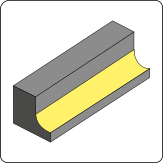 provides flexible application options for machining flat surfaces, radii, and complex contours. With its advanced RT510 TiN coating and cross-cut grinding, this tool offers excellent prerequisites for demanding milling tasks, both on industrial robots and in manual operation.
| Mill Type | Rotary Burr |
| Workpiece Materials | Steel, Stainless Steel, Cast Iron, NF-Metals, Super Alloys & Hard Materials |
| Grade | RT510=TiN-coated carbide burr for use with industrial robots or in manual operation |
| Schaft | Cylindrical Shank |
| Shape | Ball Shape |
| MOQ | To Ø10 = 3, from Ø12 = 1 |
| D | L1 | L | d | |
| HMFS-K-D06-S06 RT510 | 6 | 5 | 50 | 6 |
| HMFS-K-D08-S06 RT510 | 8 | 7 | 52 | 6 |
| HMFS-K-D10-S06 RT510 | 10 | 9 | 54 | 6 |
| HMFS-K-D12-S06 RT510 | 12 | 10 | 55 | 6 |
| HMFS-K-D14-S06 RT510 | 14 | 12 | 57 | 6 |
| HMFS-K-D16-S06 RT510 | 16 | 14 | 61 | 6 |
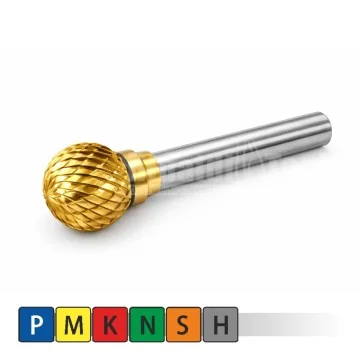
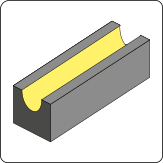 This high-quality carbide burr with a ball shape features a durable carbide head and a solid 6 mm steel shank. Designed for demanding stock removal tasks, it provides exceptional control for contouring and shaping various materials. The efficient cross-cut grinding and RT510 grade TiN coating deliver outstanding performance and reliability in both manual operation and automated industrial robot applications.
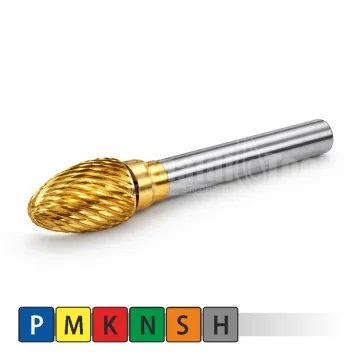
| Mill Type | Rotary Burr |
| Workpiece Materials | Steel, Stainless Steel, Cast Iron, NF-Metals, Super Alloys & Hard Materials |
| Grade | RT510=TiN-coated carbide burr for use with industrial robots or in manual operation |
| Schaft | Cylindrical Shank |
| Shape | Oval Shape |
| MOQ | To Ø8 = 3, from Ø10 = 1 |
| D | L1 | L | d | |
| HMFS-T-D06-S06 RT510 | 6 | 10 | 55 | 6 |
| HMFS-T-D08-S06 RT510 | 8 | 13 | 58 | 6 |
| HMFS-T-D10-S06 RT510 | 10 | 16 | 61 | 6 |
| HMFS-T-D12-S06 RT510 | 12 | 20 | 65 | 6 |
| HMFS-T-D14-S06 RT510 | 14 | 22 | 67 | 6 |
| HMFS-T-D16-S06 RT510 | 16 | 25 | 70 | 6 |
The HMFS-T series teardrop carbide burr with TiN coating (grade RT510) is designed for the professional machining of various materials. It features a durable carbide head and a robust 6 mm steel shank. This design is highly suitable for both flexible manual operation and automated processes on industrial robots. 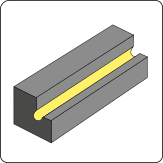
| Mill Type | Rotary Burr |
| Workpiece Materials | Steel, Stainless Steel, Cast Iron, NF-Metals, Super Alloys & Hard Materials |
| Grade | RT510=TiN-coated carbide burr for use with industrial robots or in manual operation |
| Schaft | Cylindrical Shank |
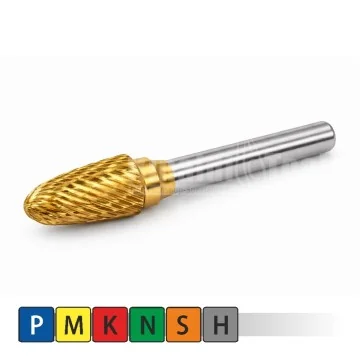
| Shape | Ball-Nosed Tree Shape |
| MOQ | To Ø8 = 3, from Ø10 = 1 |
| Item Nr. | D | L1 | L | d | |
| HMFS-RB-D06-S06 RT510 | 2800041 | 6 | 18 | 63 | 6 |
| HMFS-RB-D08-S06 RT510 | 2800042 | 8 | 18 | 63 | 6 |
| HMFS-RB-D10-S06 RT510 | 2800043 | 10 | 20 | 65 | 6 |
| HMFS-RB-D12-S06 RT510 | 2800044 | 12 | 25 | 70 | 6 |
| HMFS-RB-D14-S06 RT510 | 2800045 | 14 | 25 | 70 | 6 |
| HMFS-RB-D16-S06 RT510 | 2800046 | 16 | 25 | 70 | 6 |
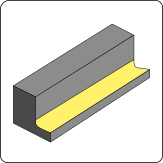
This TiN-coated rotary burr featuring a ball-nosed tree shape is designed for professional use on industrial robots as well as for manual operation. The cross-cut grinding enables swift and controlled material removal across a wide range of materials.
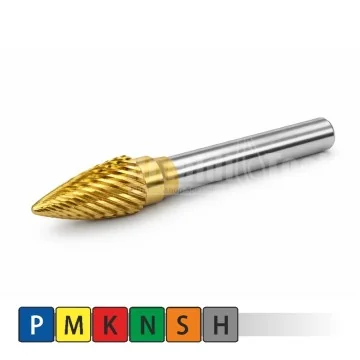
| Mill Type | Rotary Burr |
| Workpiece Materials | Steel, Stainless Steel, Cast Iron, NF-Metals, Super Alloys & Hard Materials |
| Grade | RT510=TiN-coated carbide burr for use with industrial robots or in manual operation |
| Schaft | Cylindrical Shank |
| Shape | Pointed Tree Shape |
| MOQ | To Ø8 = 3, from Ø10 = 1 |
| D | L1 | L | d | |
| HMFS-SB-D06-S06 RT510 | 6 | 18 | 63 | 6 |
| HMFS-SB-D08-S06 RT510 | 8 | 17 | 63 | 6 |
| HMFS-SB-D10-S06 RT510 | 10 | 20 | 65 | 6 |
| HMFS-SB-D12-S06 RT510 | 12 | 25 | 70 | 6 |
| HMFS-SB-D14-S06 RT510 | 14 | 25 | 70 | 6 |
| HMFS-SB-D16-S06 RT510 | 16 | 25 | 70 | 6 |
The professional rotary burr in a pointed arch shape provides a reliable solution for demanding contour machining tasks. Featuring a durable carbide head and a solid 6 mm steel shank, this tool opens up versatile applications in industrial metalworking. 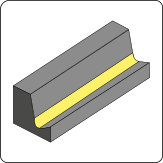 It is perfectly suited for both manual operation and automated processes using industrial robots.
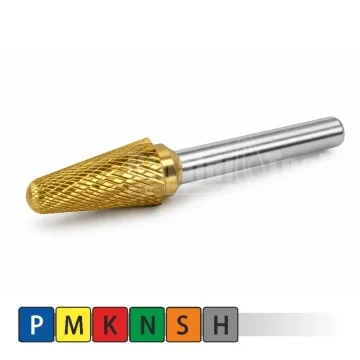
| Mill Type | Rotary Burr |
| Workpiece Materials | Steel, Stainless Steel, Cast Iron, NF-Metals, Super Alloys & Hard Materials |
| Grade | RT510: TiN-coated carbide burr for use with industrial robots or in manual operation |
| Schaft | Cylindrical Shank |
| Shape | Ball-Nosed Cone Shape |
| MOQ | To Ø8 = 3, from Ø10 = 1 |
| D | L1 | L | d | |
| HMFS-RK-D06-S06 RT510 | 6 | 16 | 61 | 6 |
| HMFS-RK-D08-S06 RT510 |
8 | 22 | 67 | 6 |
| HMFS-RK-D10-S06 RT510 |
10 | 25 | 70 | 6 |
| HMFS-RK-D12-S06 RT510 |
12 | 28 | 73 | 6 |
| HMFS-RK-D14-S06 RT510 |
14 | 28 | 73 | 6 |
| HMFS-RK-D16-S06 RT510 |
16 | 33 | 78 | 6 |
This carbide rotary burr in a ball-nosed cone shape is engineered for demanding machining operations. The combination of a resilient carbide head, a 6 mm steel shank, and a protective TiN coating establishes optimal conditions for high material removal rates. 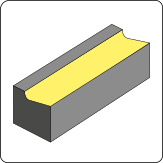
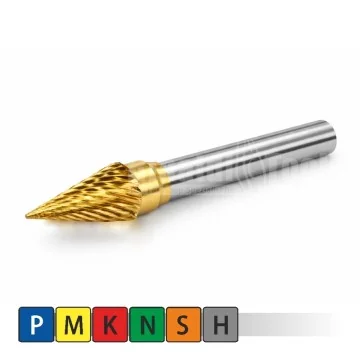
| Mill Type | Rotary Burr |
| Workpiece Materials | Steel, Stainless Steel, Cast Iron, NF-Metals, Super Alloys & Hard Materials |
| Grade | RT510=TiN-coated carbide burr for use with industrial robots or in manual operation |
| Schaft | Cylindrical Shank |
| Shape | Pointed Cone Shape |
| MOQ | To Ø8 = 3, from Ø10 = 1 |
| D | L1 | L | d | |
| HMFS-SK-D06-S06 RT510 | 6 | 18 | 63 | 6 |
| HMFS-SK-D08-S06 RT510 |
8 | 17 | 63 | 6 |
| HMFS-SK-D10-S06 RT510 |
10 | 20 | 65 | 6 |
| HMFS-SK-D12-S06 RT510 |
12 | 25 | 70 | 6 |
| HMFS-SK-D14-S06 RT510 |
14 | 25 | 70 | 6 |
| HMFS-SK-D16-S06 RT510 |
16 | 25 | 70 | 6 |
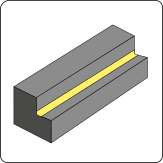 This rotary burr with a carbide head and 6 mm steel shank offers excellent processing capabilities. The TiN coating supports a reliable tool life in professional environments.
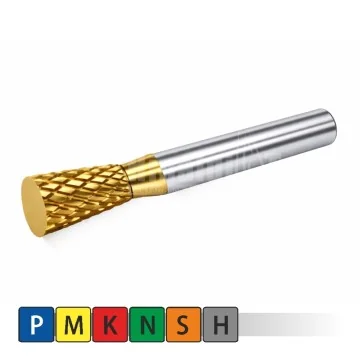
| Mill Type | Rotary Burr |
| Workpiece Materials | Steel, Stainless Steel, Cast Iron, NF-Metals, Super Alloys & Hard Materials |
| Grade | RT510: TiN-coated carbide burr for use with industrial robots or in manual operation |
| Schaft | Cylindrical Shank |
| Shape | Inverted Cone Shape |
| MOQ | To Ø10 = 3, from Ø12 = 1 |
| D | L1 | L | d | |
| HMFS-W-D06-S06 RT510 | 6 | 7 | 52 | 6 |
| HMFS-W-D08-S06 RT510 | 8 | 8 | 53 | 6 |
| HMFS-W-D10-S06 RT510 | 10 | 10 | 55 | 6 |
| HMFS-W-D12-S06 RT510 | 12 | 13 | 58 | 6 |
| HMFS-W-D14-S06 RT510 | 14 | 15 | 60 | 6 |
| HMFS-W-D16-S06 RT510 | 16 | 16 | 61 | 6 |
 The carbide rotary burr in inverted cone shape with a 6 mm steel shank is a well-thought-out solution for demanding edge and chamfering work. Thanks to the TiN coating (grade RT510) and the robust cross-cut grinding, you achieve excellent stock removal results even with tough materials.
| Mill Type | Rotary Burr |
| Workpiece Materials | Steel, Stainless Steel, Cast Iron, NF-Metals, Super Alloys & Hard Materials |
| Grade | RT510=TiN-coated carbide burr for use with industrial robots or in manual operation |
| Schaft | Cylindrical Shank |
| Shape | Ball-Nosed Tree Shape |
| MOQ | To Ø8 = 3, from Ø10 = 1 |
| Item Nr. | D | L1 | L | d | |
| HMFS-RB-D06-S06 RT510 | 2800041 | 6 | 18 | 63 | 6 |
| HMFS-RB-D08-S06 RT510 | 2800042 | 8 | 18 | 63 | 6 |
| HMFS-RB-D10-S06 RT510 | 2800043 | 10 | 20 | 65 | 6 |
| HMFS-RB-D12-S06 RT510 | 2800044 | 12 | 25 | 70 | 6 |
| HMFS-RB-D14-S06 RT510 | 2800045 | 14 | 25 | 70 | 6 |
| HMFS-RB-D16-S06 RT510 | 2800046 | 16 | 25 | 70 | 6 |
This TiN-coated rotary burr featuring a ball-nosed tree shape is designed for professional use on industrial robots as well as for manual operation. The cross-cut grinding enables swift and controlled material removal across a wide range of materials.
| Mill Type | Rotary Burr |
| Workpiece Materials | Steel, Stainless Steel, Cast Iron, NF-Metals, Super Alloys & Hard Materials |
| Grade | RT510: TiN-coated carbide burr for use with industrial robots or in manual operation |
| Schaft | Cylindrical Shank |
| Shape | Ball-Nosed Cone Shape |
| MOQ | To Ø8 = 3, from Ø10 = 1 |
| D | L1 | L | d | |
| HMFS-RK-D06-S06 RT510 | 6 | 16 | 61 | 6 |
| HMFS-RK-D08-S06 RT510 |
8 | 22 | 67 | 6 |
| HMFS-RK-D10-S06 RT510 |
10 | 25 | 70 | 6 |
| HMFS-RK-D12-S06 RT510 |
12 | 28 | 73 | 6 |
| HMFS-RK-D14-S06 RT510 |
14 | 28 | 73 | 6 |
| HMFS-RK-D16-S06 RT510 |
16 | 33 | 78 | 6 |
This carbide rotary burr in a ball-nosed cone shape is engineered for demanding machining operations. The combination of a resilient carbide head, a 6 mm steel shank, and a protective TiN coating establishes optimal conditions for high material removal rates.
| Mill Type | Rotary Burr |
| Workpiece Materials | Steel, Stainless Steel, Cast Iron, NF-Metals, Super Alloys & Hard Materials |
| Grade | RT510: TiN-coated carbide burr for use with industrial robots or in manual operation |
| Schaft | Cylindrical Shank |
| Shape | Inverted Cone Shape |
| MOQ | To Ø10 = 3, from Ø12 = 1 |
| D | L1 | L | d | |
| HMFS-W-D06-S06 RT510 | 6 | 7 | 52 | 6 |
| HMFS-W-D08-S06 RT510 | 8 | 8 | 53 | 6 |
| HMFS-W-D10-S06 RT510 | 10 | 10 | 55 | 6 |
| HMFS-W-D12-S06 RT510 | 12 | 13 | 58 | 6 |
| HMFS-W-D14-S06 RT510 | 14 | 15 | 60 | 6 |
| HMFS-W-D16-S06 RT510 | 16 | 16 | 61 | 6 |
The carbide rotary burr in inverted cone shape with a 6 mm steel shank is a well-thought-out solution for demanding edge and chamfering work. Thanks to the TiN coating (grade RT510) and the robust cross-cut grinding, you achieve excellent stock removal results even with tough materials.
| Mill Type | Rotary Burr |
| Workpiece Materials | Steel, Stainless Steel, Cast Iron, NF-Metals, Super Alloys & Hard Materials |
| Grade | RT510=TiN-coated carbide burr for use with industrial robots or in manual operation |
| Schaft | Cylindrical Shank |
| Shape | Oval Shape |
| MOQ | To Ø8 = 3, from Ø10 = 1 |
| D | L1 | L | d | |
| HMFS-T-D06-S06 RT510 | 6 | 10 | 55 | 6 |
| HMFS-T-D08-S06 RT510 | 8 | 13 | 58 | 6 |
| HMFS-T-D10-S06 RT510 | 10 | 16 | 61 | 6 |
| HMFS-T-D12-S06 RT510 | 12 | 20 | 65 | 6 |
| HMFS-T-D14-S06 RT510 | 14 | 22 | 67 | 6 |
| HMFS-T-D16-S06 RT510 | 16 | 25 | 70 | 6 |
The HMFS-T series teardrop carbide burr with TiN coating (grade RT510) is designed for the professional machining of various materials. It features a durable carbide head and a robust 6 mm steel shank. This design is highly suitable for both flexible manual operation and automated processes on industrial robots.
| Mill Type | Rotary Burr |
| Workpiece Materials | Steel, Stainless Steel, Cast Iron, NF-Metals, Super Alloys & Hard Materials |
| Grade | RT510=TiN-coated carbide burr for use with industrial robots or in manual operation |
| Schaft | Cylindrical Shank |
| Shape | Ball-Nosed Cylinder Shape |
| MOQ | To Ø8 = 3, from Ø10 = 1 |
| D | L1 | L | d | |
| HMFS-WR-D06-S06 RT510 | 6 | 16 | 61 | 6 |
| HMFS-WR-D08-S06 RT510 | 8 | 20 | 65 | 6 |
| HMFS-WR-D10-S06 RT510 | 10 | 20 | 65 | 6 |
| HMFS-WR-D12-S06 RT510 | 12 | 25 | 70 | 6 |
| HMFS-WR-D14-S06 RT510 | 14 | 25 | 70 | 6 |
| HMFS-WR-D16-S06 RT510 | 16 | 25 | 70 | 6 |
This professional rotary burr features a solid carbide head and a 6 mm steel shank, designed for efficient stock removal. The ball-nosed cylinder shape provides flexible application options for machining flat surfaces, radii, and complex contours. With its advanced RT510 TiN coating and cross-cut grinding, this tool offers excellent prerequisites for demanding milling tasks, both on industrial robots and in manual operation.
| Mill Type | Rotary Burr |
| Workpiece Materials | Steel, Stainless Steel, Cast Iron, NF-Metals, Super Alloys & Hard Materials |
| Grade | RT510=TiN-coated carbide burr for use with industrial robots or in manual operation |
| Schaft | Cylindrical Shank |
| Shape | Pointed Cone Shape |
| MOQ | To Ø8 = 3, from Ø10 = 1 |
| D | L1 | L | d | |
| HMFS-SK-D06-S06 RT510 | 6 | 18 | 63 | 6 |
| HMFS-SK-D08-S06 RT510 |
8 | 17 | 63 | 6 |
| HMFS-SK-D10-S06 RT510 |
10 | 20 | 65 | 6 |
| HMFS-SK-D12-S06 RT510 |
12 | 25 | 70 | 6 |
| HMFS-SK-D14-S06 RT510 |
14 | 25 | 70 | 6 |
| HMFS-SK-D16-S06 RT510 |
16 | 25 | 70 | 6 |
This rotary burr with a carbide head and 6 mm steel shank offers excellent processing capabilities. The TiN coating supports a reliable tool life in professional environments.
| Mill Type | Rotary Burr |
| Workpiece Materials | Steel, Stainless Steel, Cast Iron, NF-Metals, Super Alloys & Hard Materials |
| Grade | RT510=TiN-coated carbide burr for use with industrial robots or in manual operation |
| Schaft | Cylindrical Shank |
| Shape | Cylinder Shape |
| MOQ | To Ø8 = 3, from Ø10 = 1 |
| D |
L1 |
L |
d |
|
| HMFS-Z-D06-S06 RT510 | 6 | 16 | 61 | 6 |
| HMFS-Z-D08-S06 RT510 | 8 | 20 | 65 | 6 |
| HMFS-Z-D10-S06 RT510 | 10 | 20 | 65 | 6 |
| HMFS-Z-D12-S06 RT510 | 12 | 25 | 70 | 6 |
| HMFS-Z-D14-S06 RT510 | 14 | 25 | 70 | 6 |
| HMFS-Z-D16-S06 RT510 | 16 | 25 | 70 | 6 |
The professional Rotary Burr - Burrs Shape cylindrical without end fase cut provides a reliable solution for demanding machining tasks in various materials.
| Mill Type | Rotary Burr |
| Workpiece Materials | Steel, Stainless Steel, Cast Iron, NF-Metals, Super Alloys & Hard Materials |
| Grade | RT510=TiN-coated carbide burr for use with industrial robots or in manual operation |
| Schaft | Cylindrical Shank |
| Shape | Pointed Tree Shape |
| MOQ | To Ø8 = 3, from Ø10 = 1 |
| D | L1 | L | d | |
| HMFS-SB-D06-S06 RT510 | 6 | 18 | 63 | 6 |
| HMFS-SB-D08-S06 RT510 | 8 | 17 | 63 | 6 |
| HMFS-SB-D10-S06 RT510 | 10 | 20 | 65 | 6 |
| HMFS-SB-D12-S06 RT510 | 12 | 25 | 70 | 6 |
| HMFS-SB-D14-S06 RT510 | 14 | 25 | 70 | 6 |
| HMFS-SB-D16-S06 RT510 | 16 | 25 | 70 | 6 |
The professional rotary burr in a pointed arch shape provides a reliable solution for demanding contour machining tasks. Featuring a durable carbide head and a solid 6 mm steel shank, this tool opens up versatile applications in industrial metalworking. It is perfectly suited for both manual operation and automated processes using industrial robots.
| Mill Type | Rotary Burr |
| Workpiece Materials | Steel, Stainless Steel, Cast Iron, NF-Metals, Super Alloys & Hard Materials |
| Grade | RT510=TiN-coated carbide burr for use with industrial robots or in manual operation |
| Schaft | Cylindrical Shank |
| Shape | Ball Shape |
| MOQ | To Ø10 = 3, from Ø12 = 1 |
| D | L1 | L | d | |
| HMFS-K-D06-S06 RT510 | 6 | 5 | 50 | 6 |
| HMFS-K-D08-S06 RT510 | 8 | 7 | 52 | 6 |
| HMFS-K-D10-S06 RT510 | 10 | 9 | 54 | 6 |
| HMFS-K-D12-S06 RT510 | 12 | 10 | 55 | 6 |
| HMFS-K-D14-S06 RT510 | 14 | 12 | 57 | 6 |
| HMFS-K-D16-S06 RT510 | 16 | 14 | 61 | 6 |
This high-quality carbide burr with a ball shape features a durable carbide head and a solid 6 mm steel shank. Designed for demanding stock removal tasks, it provides exceptional control for contouring and shaping various materials. The efficient cross-cut grinding and RT510 grade TiN coating deliver outstanding performance and reliability in both manual operation and automated industrial robot applications.