


 Deutsch
 English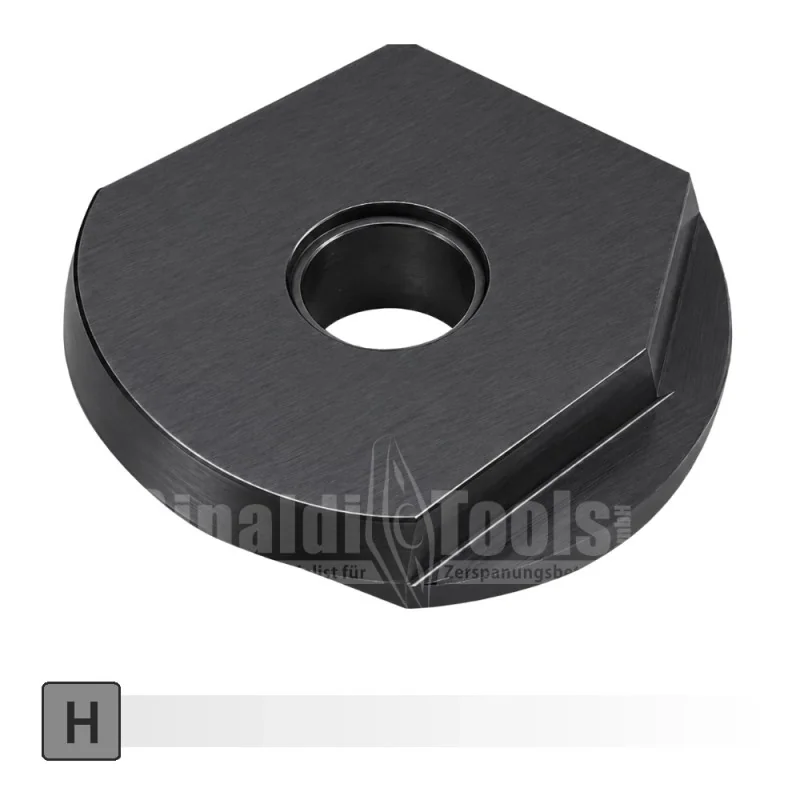
| Shape | RTHX |
| Workpiece Material | Hardened Steel up to 68 HRC |
| Processing | Finishing |
| Grade | RT350: PVD-coated carbide for high-performance machining of hardened steel |
| MOQ | 2 Pc. |
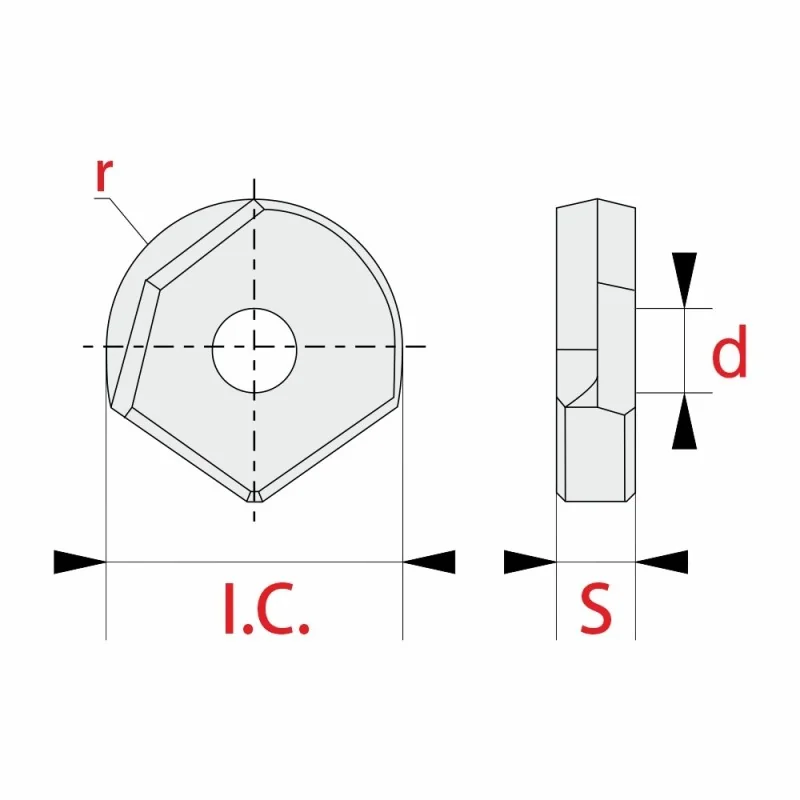
| r | I.C. | S | d | |
| RTHX 1203-HM RT905H | 6 | 12 | 3 | 4 |
| RTHX 1604-HM RT905H | 8 | 16 | 4 | 5 |
| RTHX 2005-HM RT905H | 10 | 20 | 5 | 5 |
| RTHX 2506-HM RT905H | 12,5 | 25 | 6 | 6 |
| RTHX 3007-HM RT905H | 15 | 30 | 7 | 8 |
| RTHX 3207-HM RT905H | 16 | 32 | 7 | 8 |
The RTHX-HM milling insert in grade RT905H is specifically developed for the demanding finishing operations of hardened steel up to 68 HRC. Its PVD-coated carbide and highly wear-resistant substrate support long tool life during rigorous milling tasks. The special TiAlN coating effectively reduces the formation of built-up edges, creating excellent conditions for outstanding surface finishes in hard machining.
The RTHX-HM RT905H milling insert is a professional solution for hard machining and precise finishing applications. Designed for hardened steels up to 68 HRC, this indexable insert delivers excellent performance through its combination of a wear-resistant substrate and a high-quality TiAlN coating. The coating minimizes friction, prevents the formation of built-up edges, and thus supports consistently high workpiece surface quality. This opens up economical possibilities for high-performance machining in die and mold making as well as other demanding metalworking sectors.

| Art. Nr. | r | I.C. | S | d | |
| RTHX 1203-HM RT905H | 2651451 | 6 | 12 | 3 | 4 |
| RTHX 1604-HM RT905H | 2651452 | 8 | 16 | 4 | 5 |
| RTHX 2005-HM RT905H | 2651453 | 10 | 20 | 5 | 5 |
| RTHX 2506-HM RT905H | 2651454 | 12,5 | 25 | 6 | 6 |
| RTHX 3007-HM RT905H | 2651455 | 15 | 30 | 7 | 8 |
| RTHX 3207-HM RT905H | 2651456 | 16 | 32 | 7 | 8 |
| Hardened Steel | ||||
| Vc (m/min) | fz (mm) | ap | ae | |
| RTHX 1203-HM RT905H | 120-260 | 0,07 | 0,1 | 0,2 |
| RTHX 1604-HM RT905H | 120-260 | 0,08 | 0,1 | 0,25 |
| RTHX 2005-HM RT905H | 120-260 | 0,09 | 0,1 | 0,3 |
| RTHX 2506-HM RT905H | 120-260 | 0,1 | 0,1 | 0,4 |
| RTHX 3007-HM RT905H | 120-260 | 0,11 | 0,1 | 0,5 |
| RTHX 3207-HM RT905H | 120-260 | 0,12 | 0,1 | 0,5 |
This milling insert excels particularly in the hard machining and finish milling of hardened workpieces. It is ideally suited for machining tasks in mold construction or general mechanical engineering, where hardened steel up to 68 HRC must be cut reliably and smooth surfaces are required.
The RT905H grade combines a tough, highly wear-resistant carbide substrate with a smooth TiAlN coating. This combination reduces process-related friction and heat generation at the cutting edge. The result is a reduced tendency for built-up edge formation and a uniform, defined cutting behavior even with difficult-to-machine hard materials.
| Shape | RTHX |
| Workpiece Material | Hardened Steel up to 68 HRC |
| Processing | Finishing |
| Grade | RT350: PVD-coated carbide for high-performance machining of hardened steel |
| MOQ | 2 Pc. |
| r | I.C. | S | d | |
| RTHX 1203-HM RT905H | 6 | 12 | 3 | 4 |
| RTHX 1604-HM RT905H | 8 | 16 | 4 | 5 |
| RTHX 2005-HM RT905H | 10 | 20 | 5 | 5 |
| RTHX 2506-HM RT905H | 12,5 | 25 | 6 | 6 |
| RTHX 3007-HM RT905H | 15 | 30 | 7 | 8 |
| RTHX 3207-HM RT905H | 16 | 32 | 7 | 8 |
The RTHX-HM milling insert in grade RT905H is specifically developed for the demanding finishing operations of hardened steel up to 68 HRC. Its PVD-coated carbide and highly wear-resistant substrate support long tool life during rigorous milling tasks. The special TiAlN coating effectively reduces the formation of built-up edges, creating excellent conditions for outstanding surface finishes in hard machining.
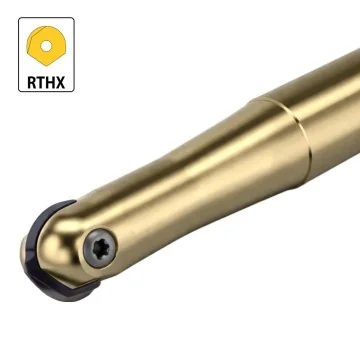
| Mill type | Form Milling Cutter |
| Insert | RTHX |
| Packaging unit | 1 Pc. |
| r | ØD | ød | Ød1 | L1 | L | |
| SRT04-D12-G16-M | 6 | 12 | 16 | 11 | 50 | 125 |
| SRT04-D12-G16-L | 6 | 12 | 16 | 11 | 70 | 150 |
| SRT04-D16-G20-M | 8 | 16 | 20 | 14 | 60 | 150 |
| SRT04-D16-G20-L | 8 | 16 | 20 | 14 | 80 | 180 |
| SRT04-D20-G25-M | 10 | 20 | 25 | 18 | 75 | 180 |
| SRT04-D20-G25-L | 10 | 20 | 25 | 18 | 95 | 200 |
| SRT04-D25-G32-M | 12,5 | 25 | 32 | 23 | 90 | 200 |
| SRT04-D25-G32-L | 12,5 | 25 | 32 | 23 | 110 | 250 |
| SRT04-D30-G40-M | 15 | 30 | 40 | 27 | 110 | 250 |
| SRT04-D32-G40-L | 16 | 32 | 40 | 29 | 125 | 300 |
The Copy Mill SRT04 in its tapered version is systematically designed for professional mold and die machining. Equipped to hold RTHX inserts, this form milling cutter creates optimal conditions for precise and efficient semi-finishing operations.
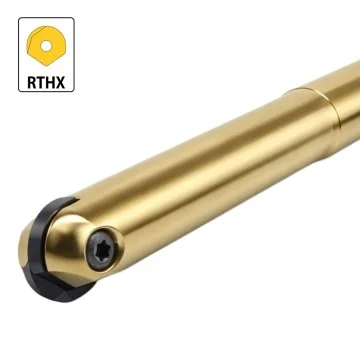
| Mill type | Form Milling Cutter |
| Insert | RTHX |
| Packaging unit | 1 Pc. |
| R | ØD | ød | Ød1 | L1 | L | |
| SRT04-D12-G12-M | 6 | 12 | 12 | 11 | 35 | 125 |
| SRT04-D12-G12-L | 6 | 12 | 12 | 11 | 45 | 150 |
| SRT04-D16-G16-M | 8 | 16 | 16 | 14 | 40 | 150 |
| SRT04-D16-G16-L | 8 | 16 | 16 | 14 | 55 | 180 |
| SRT04-D20-G20-M | 10 | 20 | 20 | 18 | 65 | 180 |
| SRT04-D20-G20-L | 10 | 20 | 20 | 18 | 100 | 250 |
| SRT04-D25-G25-M | 12,5 | 25 | 25 | 23 | 70 | 200 |
| SRT04-D25-G25-L | 12,5 | 25 | 25 | 23 | 100 | 250 |
| SRT04-D30-G32-M | 15 | 30 | 32 | 27 | 80 | 250 |
| SRT04-D30-G32-L | 15 | 30 | 32 | 27 | 110 | 300 |
| SRT04-D32-G32-M | 16 | 32 | 32 | 29 | 80 | 250 |
| SRT04-D32-G32-L | 16 | 32 | 32 | 29 | 110 | 300 |
The Copy Mill - SRT04 Slim Version is a professional machining tool engineered for precise form milling. The slender design ensures safe access to deeper workpiece areas and has been specifically developed for use with RTHX inserts.
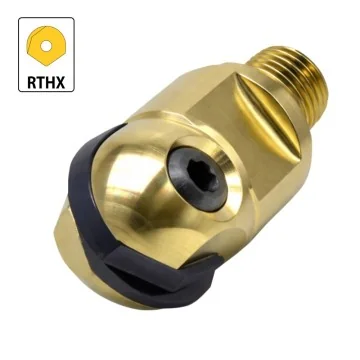
| Mill type | Form Milling Cutter |
| Insert | RTHX |
| Packaging unit | 1 Pc. |
| ØD | ØD1 | L | MD | |
| SRT04-D16-M8 | 16 | 15 | 28 | 8 |
| SRT04-D20-M10 | 20 | 19 | 30 | 10 |
| SRT04-D25-M12 | 25 | 24 | 35 | 12 |
| SRT04-D32-M16 | 32 | 30 | 45 | 16 |
The Modular Copy Mill - SRT04 is designed for use with high-performance RTHX inserts. Its interchangeable head system allows the tool to be optimally adapted to the workpiece, making it a reliable choice for the cost-effective finish machining of molds and dies.
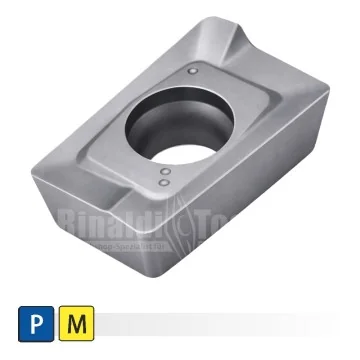
| Shape | APKT |
| Workpiece Material | Steel and Stainless Steel |
| Grade | RT300: PVD-coated P15-P25 and M10-M25 for universal use in steel and stainless steel |
| Packaging unit | 10 Pc. |
| L | d | s | d1 | r | |
| APKT 100305 PDTR RT300 | 10,39 | 6,65 | 3,53 | 2,8 | 0,5 |
| APKT 100308 PDTR RT300 | 10,39 | 6,65 | 3,53 | 2,8 | 0,8 |
The APKT 1003.. PDTR milling insert in the coated RT300 grade is a highly reliable solution for the professional machining of steel and stainless steel. As a form-fit indexable insert, it is designed for use in 90° shoulder and face milling cutters. The positive geometry supports smooth and soft cutting action, which helps to achieve precise surface finishes. The wear-resistant PVD coating RT300 is perfectly tailored for universal milling tasks in the ISO P and ISO M range, enabling efficient metal removal with great tool life.
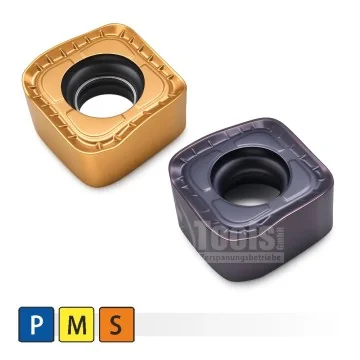
| Shape | SNMU |
| Processing | Medium/Roughing |
|
Grades |
RT250X: PVD multilayer coated P10-P30 and M10-M30 carbide for universal use in steel and stainless steel |
| RT305H: PVD grade M20-M30 for stainless steel with the most modern coating | |
| Packaging unit | 10 Pc. |
| L | I.C | S | d | r | |
| SNMU 130520-UM RT250X | 13,5 | 13,5 | 5,28 | 5,7 | 2,0 |
| SNMU 130520-UM RT305H | 13,5 | 13,5 | 5,28 | 5,7 | 2,0 |
The double-sided high-feed milling insert SNMU 130520-UM is a proven solution for professional milling tasks in medium processing and roughing. With its well-designed SNMU shape, it is specifically intended for high cost-efficiency in modern manufacturing environments. The RT250X grade features a wear-resistant PVD multilayer coating that opens up universal application possibilities in steel and stainless steel, while the RT305H grade serves as a PVD-coated high-performance option for a broad application spectrum.
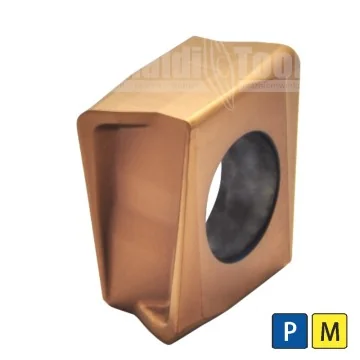
Packaging unit = 10 Pc.
Scope of application: Steel und Stainless Steel
RT250X = PVD multilayer coated P10-P30 and M10-M30 carbide for universal use in steel and stainless steel
| L | S | W | r | |
| LNKT 080408-GM RT250X | 8,75 | 4,45 | 8,75 | 0,8 |
| LNKT 120608-GM RT250X | 12,7 | 6,75 | 12,7 | 0,8 |
| LNKT 160708-GM RT250X | 16,05 | 7,35 | 16,05 | 0,8 |
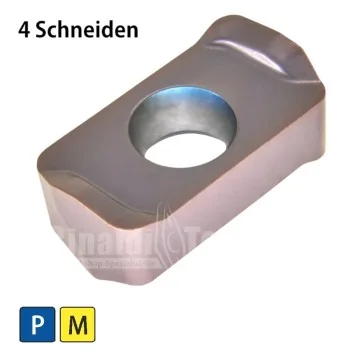
| Plate Shape | LOKX |
| Processing | High Feed |
| Material | Steel and Stainless Steel |
| Coating | RT300: PVD-coated P15-P25 and M10-M25 for universal use in steel and stainless steel |
| Packaging unit | 10 Pc. |
| L | ap max | W | S | r | |
| LOKX 030310-MR RT300 | 11,86 | 1,00 | 6 | 4,29 | 1 |
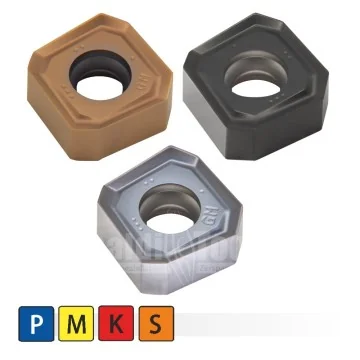
| Shape | SNEG |
|
Grades |
RT250X = PVD multilayer coated P10-P30 and M10-M30 carbide for universal use in steel and stainless steel |
| RT150K = CVD-coated K10-K20 carbide for rough cast machining | |
| RT305 = PVD grade M20-M30 for stainless steel with the most modern coating | |
| Packaging unit | 10 Pc. |
| L | I.C | S | d | r | |
| SNEG1205-GM RT150K | 7,6 | 12 | 4,76 | 4,6 | 0,8 |
| SNEG1205-GM RT250X | 7,6 | 12 | 4,76 | 4,6 | 0,8 |
| SNEG1205-GM RT305H | 7,6 | 12 | 4,76 | 4,6 | 0,8 |
The SNEG1205-GM is a robust indexable insert designed for professional industrial milling operations. Thanks to its stable GM geometry and the selection of specialized carbide grades, it supports efficient machining processes across various materials.
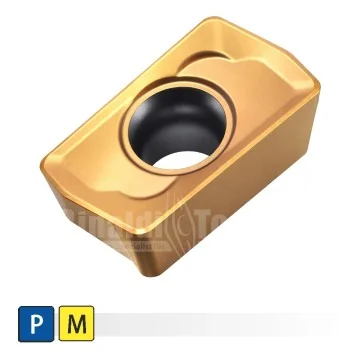
| Shape | APKT |
| Workpiece Material | Steel and Stainless Steel |
| Grade | RT250X: PVD multilayer coated P10-P30 and M10-M30 carbide for universal use in steel and stainless steel |
| Packaging unit | 10 Pc. |
| L | d | s | r | I.W | |
| APKT 11T3-HV RT250X | 12,24 | 2,8 | 3,6 | - | 6,5 |
The APKT 11T3-HV indexable insert combines an advanced high-feed geometry with shoulder milling capabilities in a single system. Thanks to the PVD multilayer coated RT250X carbide grade, it delivers reliable performance in the universal machining of steel and stainless steel within P and M applications.

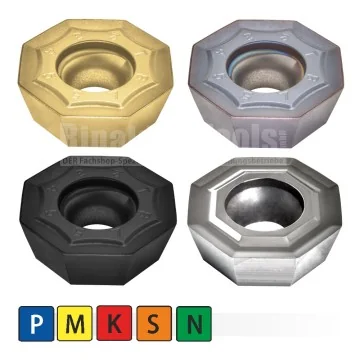
| Shape | SEET |
Grades |
RT100: Uncoated K10-K15 carbide for aluminum and plastics |
| RT150K: CVD-coated K10-K20 carbide for cast iron machining | |
| RT250X: PVD-Multilayer Beschichtetes P10-P30 und M10-M30 Hartmetall für die Universelle Anwendung in Stahl und Edelstahl | |
| RT305H: High-Performance PVD coating for efficient use in stainless steel and superalloy. | |
| Packagig Unit | 10 pc. |
| L | I.C. | S | d | r | Scope of application | |
| ODHT 060508-M RT305H | 6,50 | 15,875 | 5,56 | 5,4 | 0,8 | Stainless Steel & Super alloys |
| ODHT 060508-M RT250X | 6,50 | 15,875 | 5,56 | 5,4 | 0,8 | Steel & Stainless Steel |
| ODHT 060508-M RT150K | 6,50 | 15,875 | 5,56 | 5,4 | 0,8 | Cast Iron |
| ODHT 060508-ALZ RT100 | 6,50 | 15,875 | 5,56 | 5,4 | 0,8 | ALU / Plastic / NE-Materials |
The octagonal ODHT 060508 indexable insert is engineered for demanding face milling tasks. When paired with suitable 45-degree face milling cutters, it supports efficient and reliable surface machining on modern CNC centers and conventional milling machines. With eight usable cutting edges per insert, this tooling solution ensures excellent cost efficiency and productivity in professional metalworking applications.



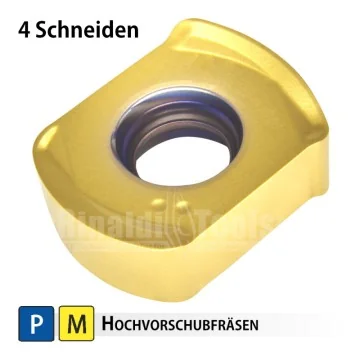
| Shape | LNMX |
| Processing | High Feed |
| Workpiece Material | Steel and Stainless Steel |
| Grade | RT330: PVD-coated P15-P25 and M10-M25 for universal use in steel and stainless steel |
| Cutting edges | 4 |
| Packaging unit | 10 Pc. |
| L | APmax | W | S | r | |
| LNMX 0904-MU RT330 | 11,94 | 1,50 | 9,2 | 4,79 | 1,20 |
The high feed milling insert LNMX 0904-MU in the RT330 grade is a professional solution for the efficient machining of steel and stainless steel. Thanks to its soft-cutting geometry, it reduces cutting forces and creates excellent conditions for high metal removal rates, making it highly suitable even for use on low-power machines.
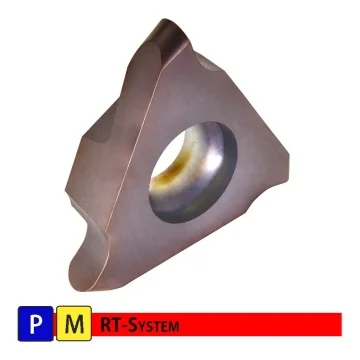
| Grooving Insert | RT22R/L RT305 |
| Workpiece Materials | Steel and Stainless Steel |
| Grooving system | RT-System |
| Grade | RT305 = PVD grade M20-M30 for stainless steel with the most modern coating |
| Packaging unit | 5 Pc. |
| W±0,025 | r | La max | øI.C | S | |
| RT22R100R RT305 | 1 | 0,5 | 2 | 12,7 | 4,76 |
| RT22L100R RT305 | 1 | 0,5 | 2 | 12,7 | 4,76 |
| RT22R150R RT305 | 1,5 | 0,75 | 3,5 | 12,7 | 4,76 |
| RT22L150R RT305 | 1,5 | 0,75 | 3,5 | 12,7 | 4,76 |
| RT22R170R RT305 | 1,7 | 0,85 | 3,5 | 12,7 | 4,76 |
| RT22R200R RT305 | 2 | 1 | 3,5 | 12,7 | 4,76 |
| RT22L200R RT305 | 2 | 1 | 3,5 | 12,7 | 4,76 |
| RT22R250R RT305 | 2,5 | 1,25 | 4 | 12,7 | 4,76 |
| RT22L250R RT305 | 2,5 | 1,25 | 4 | 12,7 | 4,76 |
| RT22R300R RT305 | 3 | 1,5 | 4 | 12,7 | 4,76 |
| RT22L300R RT305 | 3 | 1,5 | 4 | 12,7 | 4,76 |
| RT22R320R RT305 | 3,2 | 1,6 | 4 | 12,7 | 4,76 |
| RT22R400R RT305 | 4 | 2 | 5 | 12,7 | 4,76 |
| RT22L400R RT305 | 4 | 2 | 5 | 12,7 | 4,76 |
The RT22R/L full radius grooving insert with the advanced RT305 PVD coating is the ideal choice for demanding grooving operations in steel and stainless steel. Specially developed for creating exact radii from 0.5 to 2 mm, it provides reliable machining performance for professional manufacturing tasks.
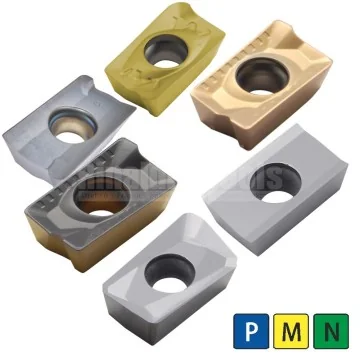
| Shape | APKT |
|
Grades |
RT400+: CVD-coated P30-P40 carbide for milling in steel |
| RT330: PVD-coated P15-P25 and M10-M25 for universal use in steel and stainless steel | |
| RT300: PVD-coated P15-P25 and M10-M25 for universal use in steel and stainless steel | |
| RT100: Uncoated K10-K15 carbide for ALU and plastics | |
| Packaging unit | 10 Pc. |
| L | d | s | d1 | r | |
| APKT 1604PDSR-30 RT400+ | 16,50 | 9,54 | 4,76 | 4,4 | 0,8 |
| APKT 1604PDSR-30 RT330 | 16,50 | 9,54 | 4,76 | 4,4 | 0,8 |
| APKT 1604PDTR RT300 | 16,50 | 9,54 | 4,76 | 4,4 | 0,95 |
| APKT 160424PDTR RT330 | 16,50 | 9,54 | 4,76 | 4,4 | 2,4 |
| APKT 1604-ALZ RT100 | 16,50 | 9,54 | 4,76 | 4,4 | 0,4 |
| APKT 160408-AL RT100 | 16,50 | 9,54 | 4,76 | 4,4 | 0,8 |
The APKT 1604 milling insert is a proven solution for precise and economical machining. Thanks to its positive geometry and a selection of four coordinated carbide grades, this insert covers a wide spectrum of materials ranging from steel and stainless steel to aluminum and plastics. It thus creates excellent conditions for efficient shoulder, corner, and face milling in professional production.
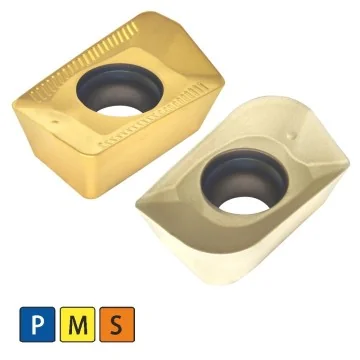
| Shape | XOKT |
| Workpiece Materials |
RT330: Steel and Stainless Steel |
|
RT350: Steel, Stainless Steel and special materials |
|
| Grades |
RT330: PVD-coated P15-P25 and M10-M25 for universal use in steel and stainless steel |
|
RT350: PVD-coated M15-M30 and S15-S30 for universal use in steel, stainless steel and special materials |
|
| Packaging unit | 10 Pc. |
| L | W | s | r | |
| XOKT 120408-M RT330 | 12 | 8,2 | 5,07 | 0,8 |
| XOKT 120431-M RT350 | 12 | 8,2 | 5,07 | 3,1 |
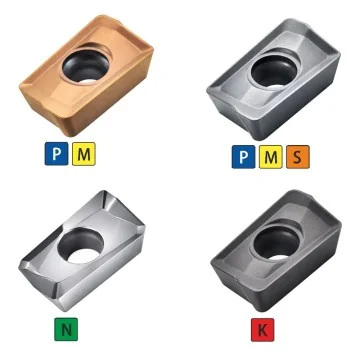
| Shape | APKT |
|
Grades |
RT250X = PVD multilayer coated P10-P30 and M10-M30 carbide for universal use in steel and stainless steel |
| RT250K = CVD-coated K10-K20 carbide for rough cast machining | |
| RT100 = Uncoated K10-K15 carbide for ALU and plastics | |
| RT305H: PVD-coated high-performance grade for a wide range of applications. | |
| Packaging unit | 10 Pc. |
| L | d | s | I.W | r | |
| APKT 11T304-PF RT250X | 12,24 | 2,8 | 3,6 | 6,5 | 0,4 |
| APKT 11T308-PM RT250X | 12,24 | 2,8 | 3,6 | 6,5 | 0,8 |
| APKT 11T312-PM RT250X | 12,24 | 2,8 | 3,6 | 6,5 | 1,2 |
| APKT 11T316-PM RT250X | 12,24 | 2,8 | 3,6 | 6,5 | 1,6 |
| APKT 11T320-PM RT250X | 12,24 | 2,8 | 3,6 | 6,5 | 2,0 |
| APKT 11T304-PM RT150K | 12,24 | 2,8 | 3,6 | 6,5 | 0,4 |
| APKT 11T308-PM RT150K | 12,24 | 2,8 | 3,6 | 6,5 | 0,8 |
| APKT 11T312-PM RT150K | 12,24 | 2,8 | 3,6 | 6,5 | 1,2 |
| APKT 11T316-PM RT150K | 12,24 | 2,8 | 3,6 | 6,5 | 1,6 |
| APKT 11T320-PM RT150K | 12,24 | 2,8 | 3,6 | 6,5 | 2,0 |
| APKT 11T304-ALZ RT100 | 12,24 | 2,8 | 3,6 | 6,5 | 0,4 |
| APKT 11T308-ALZ RT100 | 12,24 | 2,8 | 3,6 | 6,5 | 0,8 |
| APKT 11T308-PM RT305H | 12,24 | 2,8 | 3,6 | 6,5 | 0,8 |
| APKT 11T316-PM RT305H | 12,24 | 2,8 | 3,6 | 6,5 | 1,6 |
The Milling Insert APKT 11 by Rinaldi-Tools is a high-performance indexable insert designed for precise milling operations. Thanks to different geometries and modern cutting materials, it is ideal for shoulder milling and machining complex workpiece contours. With specific grades tailored for steel, stainless steel, cast iron, aluminum, and super-alloys, this tool supports flexible applications in industrial manufacturing.
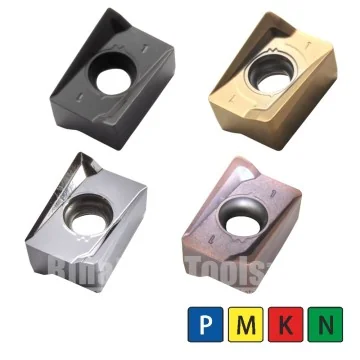
| Shape | ANGX |
|
Grades |
RT150K: CVD-coated K10-K20 carbide for casting machining |
| RT250X: PVD multilayer coated P10-P30 and M10-M30 carbide for universal use in steel and stainless steel | |
| RT100: uncoated K10-K20 carbide for casting machining | |
| RT305H: PVD-coated high-performance grade for a wide range of applications. | |
| Packaging unit | 10 Pc. |
| L | S | d | W | r | ap max | |
| ANGX 110508-GM RT150K | 11,85 | 5,7 | 3,5 | 8,4 | 0,8 | 11,2 |
| ANGX 110508-GM RT250X | 11,85 | 5,7 | 3,5 | 8,4 | 0,8 | 11,2 |
| ANGX 110504-ALZ RT100 | 11,85 | 5,7 | 3,5 | 8,4 | 0,4 | 11,2 |
| ANGX 110508-GM RT305H | 11,85 | 5,7 | 3,5 | 8,4 | 0,8 | 11,2 |
| ANGX 110520-GM RT305H | 11,85 | 5,7 | 3,5 | 8,4 | 2,0 | 11,2 |
| L | S | d | W | r | ap max | |
| ANGX 150608-GM RT150K | 15,43 | 7,3 | 4,4 | 11 | 0,8 | 14,5 |
| ANGX 150608-GM RT250X | 15,43 | 7,3 | 4,4 | 11 | 0,8 | 14,5 |
| ANGX 150608-ALZ RT100 | 15,43 | 7,3 | 4,4 | 11 | 0,8 | 14,5 |
The ANGX series indexable insert provides optimal conditions for demanding milling processes. Thanks to the available grades, this tool is suitable for a wide range of materials, including steel, stainless steel, cast iron, aluminum, and plastics. The robust design supports high depths of cut and efficient workflows in professional machining.
| Inserts K | r | L | I.C. | S | d |
| VPGT 220502-K-ALZ RT100 | 0,2 | 12 | 12,70 | 5,56 | 5,50 |
| VPGT 220505-K-ALZ RT100 | 0,5 | 12 | 12,70 | 5,56 | 5,50 |
| VPGT 220508-K-ALZ RT100 | 0,8 | 12 | 12,70 | 5,56 | 5,50 |
| VPGT 220510-K-ALZ RT100 |
1,0 | 12 | 12,70 | 5,56 | 5,50 |
| VPGT 220515-K-ALZ RT100 | 1,5 | 12 | 12,70 | 5,56 | 5,50 |
| VPGT 220520-K-ALZ RT100 |
2,0 | 12 | 12,70 | 5,56 | 5,50 |
| VPGT 220525-K-ALZ RT100 | 2,5 | 12 | 12,70 | 5,56 | 5,50 |
| VPGT 220530-K-ALZ RT100 | 3,0 | 12 | 12,70 | 5,56 | 5,50 |
| VPGT 220532-K-ALZ RT100 | 3,2 | 12 | 12,70 | 5,56 | 5,50 |
| Inserts G | r | L | I.C. | S | d |
| VPGT 220540-G-ALZ RT100 | 4,0 | 12 | 12,70 | 5,56 | 5,50 |
| VPGT 220550-G-ALZ RT100 | 5,0 | 12 | 12,70 | 5,56 | 5,50 |
| VPGT 220560-G-ALZ RT100 | 6,0 | 12 | 12,70 | 5,56 | 5,50 |
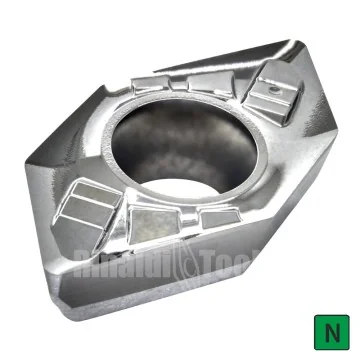
The milling insert VPGT .... ALZ RT100 is an indexable insert designed for the demanding machining of aluminium and non-ferrous metals. It supports efficient workflows in metal cutting and enables clean surfaces.
PLEASE NOTE!!
Holder MK90....-K for indexable insert VPGT ...-K (corner radius indexable insert up to 3.2 mm)
Holder MK90....-G for indexable insert VPGT ...-G (corner radius indexable insert from 4 mm)
Packaging unit = 10 Pc.
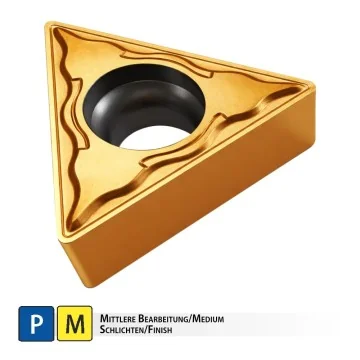
| Shape | TCMT |
| Processing | Medium and finish |
| Cutting conditions | Continuous and light interrupted |
| Workpiece Material | Steel and Stainless Steel |
| Grade | RT250X: PVD multilayer coated P10-P30 and M10-M30 carbide for universal use in steel and stainless steel |
| Packaging unit | 10 Pc. |
| r | L | I.C | S | d | |
| TCMT 110204-HF RT250X | 0,4 | 11 | 6,35 | 2,38 | 2,8 |
| TCMT 110208-HF RT250X | 0,8 | 11 | 6,35 | 2,38 | 2,8 |
| TCMT 16T304-HF RT250X | 0,4 | 16,5 | 9,525 | 3,97 | 4,4 |
| TCMT 16T308-HF RT250X | 0,8 | 16,5 | 9,525 | 3,97 | 4,4 |
The TCMT...-HF RT250X is a PVD multilayer coated indexable insert tailored for professional turning operations. It is specifically designed for medium machining and finishing tasks on steel and stainless steel. The combination of the proven TCMT geometry and the versatile RT250X carbide grade provides a solid foundation for consistent and stable processes during continuous and light interrupted cuts.

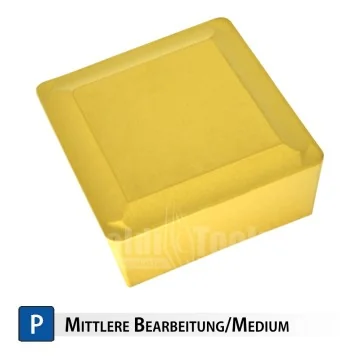
| Shape | SPMR |
| Processing | Medium |
| Workpiece Material | Steel |
| Grade | RT250: CVD-coated P25-TIN hard metal for general steel processing |
| Packaging unit | 10 Pc. |
| r | L | I.C. | S | |
| SPMR 120308-PM RT250 | 0,8 | 12,7 | 12,7 | 3,18 |
The SPMR 120308-PM RT250 insert is specifically developed for the professional machining of steel materials in the medium application range. Featuring the high-quality CVD coating on P25-TiN carbide, it provides excellent thermal stability. Combined with its sophisticated geometry, it supports efficient workflows and delivers consistent results in industrial manufacturing.